Latest Posts
- Instant Pot vs Ninja Foodi: Which Multi Cooker Actually Wins in 2026?
- Best Budget Mini Electric Pressure Cookers for Students & Small Families (2026 Edition)
- Smart Coffee Makers Explained Honestly: What Actually Works, What Fails, and When Simple Coffee Machines Win
- Smart vs Manual Blenders Explained: How to Choose the Right Blender for Real Home Use
- Best Smart Air Fryers (2026 Reviews): Take the Guesswork Out of Cooking with Smart Presets
Other Categories
Home & Kitchen Gadget is ad free and support completely to their readers. If you buy any thing through links on our site, we may earn an affiliate commission.
Stop Wasting Money: “Tilt-Head vs. Bowl-Lift” Data-Driven Guide to Choosing Your Perfect Stand Mixer
-
 Waqas Ramzan
- December 11, 2025
- Electric Appliance
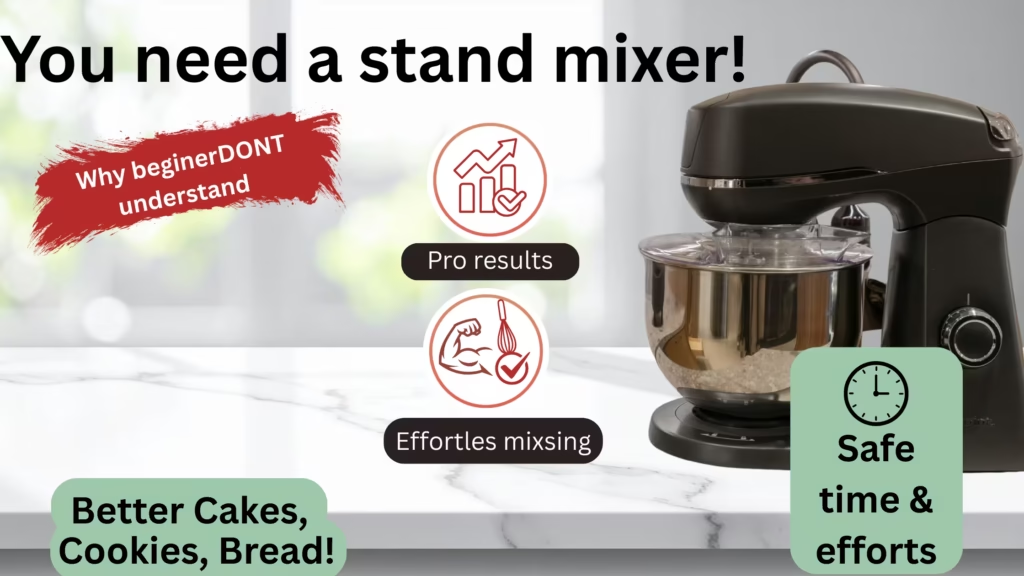
Are your wrists aching after whipping a batch of cream? Do you dread the 15-minute arm workout of kneading bread dough? Or maybe you’re just overwhelmed, staring at a screen full of options, wondering which best stand mixer is truly worth your hard-earned money.
If that sounds familiar, take a deep breath. You’re not alone. Choosing the right stand mixer can feel like a monumental task, but it doesn’t have to be.
This guide is your shortcut. We’ve cut through the marketing fluff and analyzed real user data, search trends, and performance specs to bring you clear, data-driven stand mixer recommendations. This is your one-stop buying guide, complete with head-to-head comparisons, to find the perfect mixer for you—whether you’re a beginner looking for the best affordable stand mixer, a home baker seeking the best mixer for baking, or a serious enthusiast needing the best stand mixer for bread dough.
What is a Stand Mixer?
Let’s start with the absolute basics. If you’ve ever asked, “What even is this thing?”, you’re in the right place.
In simple terms, a stand mixer is a countertop appliance that automates the mixing, kneading, and whipping of ingredients—completely hands-free.
The Core Components:
Every stand mixer is built around three key parts:
- The Base:This is the heavy foundation that houses the motor and keeps the machine stable.
- The Head:This unit houses the motor and features an attachment hub, functioning as the mixer’s control center.
- The Bowl:This is where the magic happens, where your ingredients are combined.
So, What is a Stand Mixer Used For?
This is where it gets exciting. With its three core attachments the flat beater for general mixing, the dough hook for kneading (a true bread mixer’s best friend), and the wire whip for aerating your stand mixer becomes a kitchen powerhouse. It effortlessly tackles tasks that are tedious or difficult by hand, making it the ultimate tool for anyone who wants to bake and cook more efficiently.
“Once you have your mixer, our beginner’s journey from whipped cream to homemade pasta will show you how to use a stand mixer for all those exciting recipes.”
Why Stand Mixers Matter More Than Beginners Realize
A stand mixer isn’t just a bigger, heavier version of a hand mixer. It changes the entire experience of baking. Suddenly, instead of fighting the dough, you’re watching it come together with ease. Instead of struggling with clumps of butter or uneven batter, you’re getting smooth, airy textures every single time.
The truth is, baking is technique but it’s also equipment. A good mixer stand does something that even skilled hands can’t replicate consistently: it delivers even, steady motion without losing strength.
That means:
- your cakes rise better
- your cookies mix evenly
- your bread dough develops structure
- your whipped cream holds its shape
- your batter doesn’t collapse under inconsistent mixing
Whether you want a stand mixer for cakes, a beautiful stand mixer that doubles as decor, or a multipurpose stand mixer for baking and dough, the right machine becomes a partner in the kitchen not a tool you fight with.
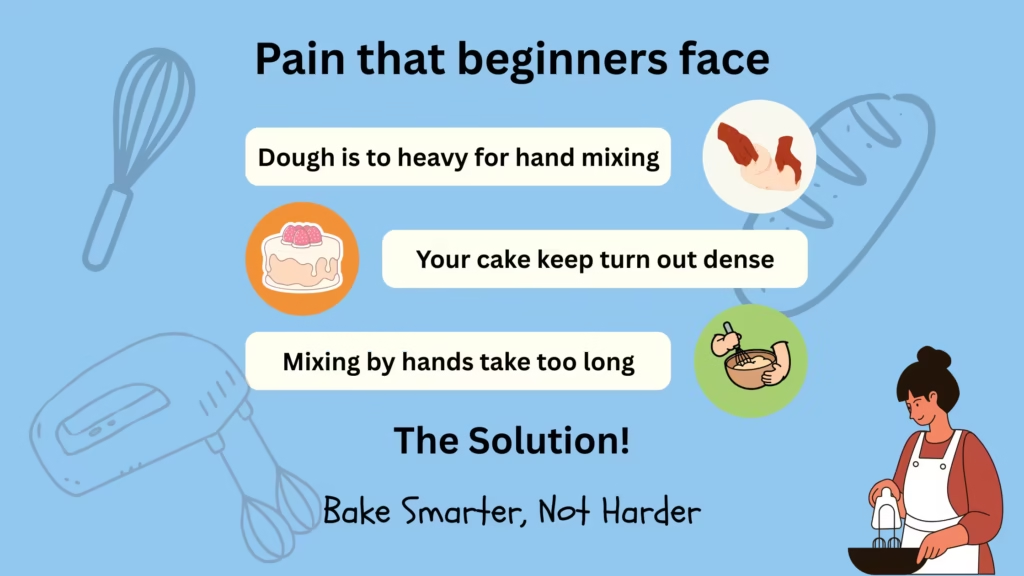
The Pain Points Most Beginners Face (And How to Fix Them)
Bread dough is one of the biggest reasons people start shopping for a stronger mixer. Anyone who has tried kneading thick dough for ten minutes knows the pain: it sticks, it resists, it tires your hands, and it rarely forms that perfect glossy finish you see in videos.
That’s why people searching for the best food mixer for bread dough or a powerful bread mixer quickly learn that not all mixers are built the same. Dough requires torque steady, strong rotational force not just wattage. Without it, the mixer strains, overheats, or stops mid knead.
A well built mixer makes dough feel effortless. It stays stable, doesn’t shake across your counter, and develops gluten properly so your bread actually rises the way it should.
Problem #1: “My bread dough is impossible. My arms hurt and my mixer can’t handle it.”
You’re looking for the best food mixer for bread dough. Here’s the truth: you need a heavy duty stand mixer with real power, not just a high wattage number.
- The real fix is a mixer with a strong motor and a good dough hook.A lot of cheaper mixers spin fast but don’t have the slow, stubborn strength (they call it torque) to knead properly. That’s why your machine shakes, heats up, and leaves you with dense bread.
- What to get:You need a mixer built for the job. Look for a gear driven (not belt driven) stand mixer. This is what gives you that steady, powerful kneading action. When you see “heavy duty stand mixer,” that’s what they mean.
- For serious bakers:The KitchenAid 7 Quart Bowl Lift model is a tank. It’s built like a true bread mixer. The bowl locks down, it doesn’t wobble, and it powers through dough that would stall a weaker machine.
- For a smart value:The Cuisinart 5.5 Quart is a powerful surprise. It has the muscle to be a great mixer for baking bread without the premium price tag.
Problem #2: “My cakes are dense and my cookies are uneven.”
This is the most common issue for beginners. The culprit is almost always your baking mixer or how you’re using it. You need control.
- The real fix is a precise mixer that mixes gently and evenly. For cakes, you’re not fighting dough; you’re gently building air into batter. The best mixer for baking cakes gives you low speeds for folding and higher speeds for whipping cream perfectly.
- What to get: You want a classic bowl mixer known for consistent results. This is where the KitchenAid Artisan 5 Quart It’s the ultimate cake food mixer for home bakers. The beater reaches every part of the bowl, so you don’t get pockets of flour. The speed settings let you go from a slow stir to a fast whip without shocking the batter.
Problem #3: “Hand mixing takes forever. I just want my time back.”
Life’s too short to cream butter by hand. A good mixer isn’t a luxury; it’s a time machine that gives you your evenings back.
- The real fix is a “set it and forget it” helper. Any solid stand mixer will do this. The goal is to get a tool that works while you do other things grease pans, wash dishes, or just take a breath.
- What to get:
- Your first serious mixer: The KitchenAid Classic 4.5 Quart is the best entry point. So many people say, “I wish I bought this sooner!” It handles all the basics and frees you up instantly.
- For small spaces & small budgets: The Hamilton Beach 4 Quart is a fantastic little helper. It sticks to the counter and does the job without fuss, perfect for occasional bakers.
Quick Guide to Stop Overthinking It
- “I mostly bake BREAD.”→ You need a heavy duty stand mixer. Look at the KitchenAid 7QT (the pro choice) or the Cuisinart 5.5QT (the value choice).
- “I mostly bake CAKES, COOKIES, and FROSTING.”→ You need the best mixer for baking those things. Get the KitchenAid Artisan. It’s the classic cake food mixer for a reason.
- “I want a great all around mixer for a fair price.”→ Get the KitchenAid Classic. It’s a reliable bowl mixer that covers 90% of what a home cook needs.
- “I want power and it to look incredible.”→ The Smeg mixer is your answer. It’s a powerful, stylish mixer for baking that performs as well as it looks.
Bottom Line: If you’re baking a mix of things every week, the KitchenAid Artisan is the most reliable good mixer you can buy. It solves the cake problem perfectly and handles most doughs without a sweat. Stop stressing and get back to the fun part the baking.
Crucial Buying Guide: How to Choose the Right Stand Mixer
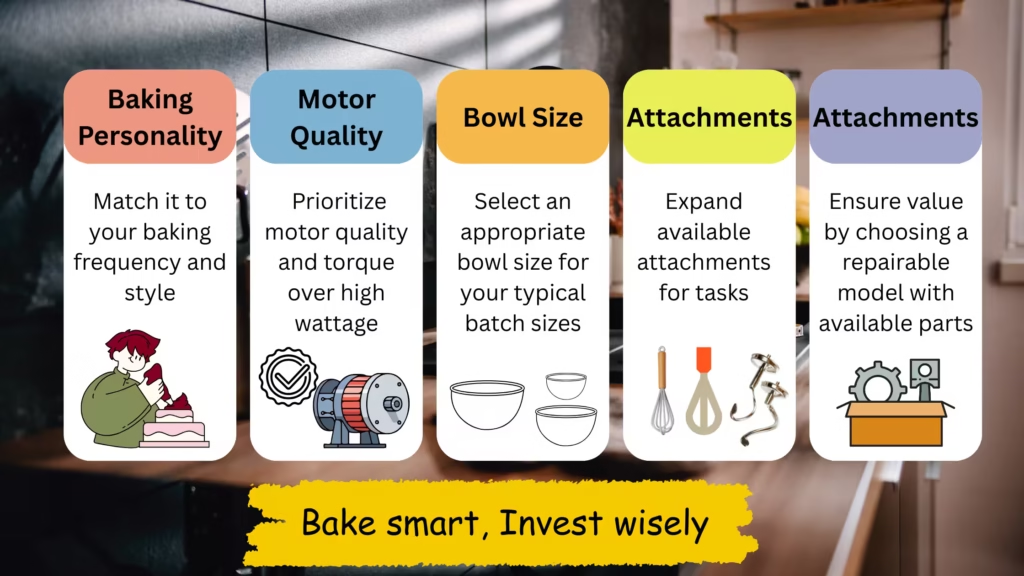
This is the heart of the decision. Let’s break down the key factors you need to consider.
Match the Mixer to Your Baking Personality
Are you a weekend baker? A bread lover? A holiday baker? A multitasking parent? Or someone starting a small home bakery?
- If you bake occasionally, a simple cake mixer works well.
- If you bake frequently, a stronger mixers for baking model provides long term reliability.
- If you are diving into bread, you need a dough friendly machine with real power.
- If you have limited counter space, a compact bowl mixer or multipurpose option saves room.
Choosing becomes easy once you stop chasing features and start looking at your own habits.
Tilt-Head vs. Bowl-Lift: The Great Debate
This is the most fundamental choice, and it boils down to convenience vs. power.
Tilt-Head (e.g., KitchenAid Artisan): The entire head tilts back. This makes it incredibly easy to add ingredients, scrape down the bowl, and change attachments. It’s generally more compact and comes in a wide array of colors. Best for: Most home bakers, those with limited space, and people who value easy access.
Bowl-Lift (e.g., KitchenAid Professional 600): The head is fixed, and the bowl is raised into place with a lever. This design offers superior stability and less wobble when tackling heavy doughs. These models almost always have more powerful motors. Best for: Serious bakers, bread enthusiasts, and anyone who regularly makes large batches.
Size & Capacity: What Size Stand Mixer Do I Need?
Bowl capacity is measured in quarts (Qt). Your choice should reflect your typical batch size, Beginners often underestimate bowl size. If you use a small bowl when baking for a family, you end up mixing in multiple batches. If you bake small quantities, a giant bowl can feel inconvenient.
4.5 – 5 Quarts: Ideal for occasional bakers and smaller families. Perfect for standard recipes of cookies, cakes, and single loaves of bread. (Example: KitchenAid Artisan 5 Qt).
6 – 7 Quarts: The go-to for large families, frequent entertainers, and serious bread bakers. Handles double batches of dough with ease. (Example: KitchenAid Professional 600).
Motor Power: The Heart of the Machine
Wattage matters, especially for dense tasks. The debate of kitchenaid artisan vs professional often comes down to this. A more powerful motor (500W+) will knead thick bread dough without straining, while a less powerful one (~300W) is sufficient for cakes, cookies, and whipping.
Attachments Turn a Mixer into a Multitool
Attachments are a game changer they’re the reason people fall in love with mixers. You start with the essentials:
- the whisk
- the dough hook
- the paddle
Then you discover a whole world of addons:
- KitchenAid Stand Mixer Attachments
- Cuisinart Mixer Attachments
- Kenwood Stand Mixer Attachments
- Bosch Stand Mixer Attachments
- stand mixer pasta press
- kitchen aid stand mixer ice cream attachment
With these attachments, your mixer can do so much more than mixing batter. It can make fresh pasta, shred chicken or vegetables, roll dough perfectly, churn homemade ice cream, and even grind meat for burgers or sausages.
Here’s a quick brand wise view of popular attachments to show the versatility:
KitchenAid Attachments Post – Full List: Pasta roller & cutter, ravioli maker, grain mill, meat grinder & sausage stuffer, slicer/shredder, ice cream maker, food processor attachments.
Bosch Attachments Post – Complete Guide: Pasta roller & cutter, meat grinder, slicer/shredder, ice cream maker, blender/food processor/juicer attachments.
Cuisinart Attachments Post – Check Options: Pasta maker attachment, meat grinder/sausage attachment, optional dessert bowls.
Smeg: Mostly standard mixing; few optional accessories.
Breville & Hamilton Beach: Primarily core attachments (whisk, paddle, dough hook) with limited or no special add ons.
Understand Motor Quality vs. Wattage
Many people believe a higher watt number means better performance. It doesn’t.
Wattage tells you how much electricity the motor uses, not how strong the motor actually is. A well engineered machine with medium wattage often outperforms a cheaper, high watt model.
This is why experienced bakers lean toward brands like Cuisinart stand mixer, Hamilton beach stand mixer, or high end options like smeg mixer and smeg stand mixer. They care about torque, motor design, and stability not just the number printed on the box.
Consider Future Repairs and Availability of Parts
A mixer is an investment. And like any long term tool, it should be repairable. Models with widely available replacement parts such as kitchenaid stand mixer attachment, Cuisinart stand mixer attachments, or other branded components offer better longevity.
If you’re budget conscious, exploring a refurbished kitchen aid mixer is also smart. You get the reliability of a premium machine at a significantly lower cost.
“The possibilities are endless. If you need inspiration, see our promotional post on creative stand mixer tasks like making butter and shredding chicken to see what your new machine can really do.”
Brand & Model Considerations
The keyword data highlights a clear landscape:
- KitchenAid: The industry leader, known for durability, style, and a huge attachment ecosystem.
- Cuisinart: A strong competitor, often offering great value and powerful features.
- Breville: Known for high-end, innovative designs with smart features.
- Hamilton Beach: A top choice for budget-conscious buyers seeking reliable performance.
- Smeg: The choice for those who prioritize retro aesthetics and style.
Budget & Value
Your budget will naturally segment your options:
- Budget-Friendly: Look at models like the Hamilton Beach stand mixer. Also, keep an eye out for a kitchenaid mixer sale or consider a refurbished kitchenaid mixer for significant savings.
- Mid-Range: This is the sweet spot, dominated by the KitchenAid Artisan
- Premium: For those who want the best, consider high-capacity KitchenAid models or specialized brands like Ankarsrum.
Full Comparison Table (Specs at a Glance)
| Model | Type | Capacity | Motor Power | Best For | Price (aprox) |
|---|---|---|---|---|---|
|
KitchenAid Artisan 5-Qt |
Tilt-Head |
5 Quarts |
325W |
The all-around home baker; style and convenience. |
$300 |
|
KitchenAid Pro 600 |
Bowl-Lift |
7 Quarts |
575W |
Serious bakers & bread lovers; power and capacity. |
$650 |
|
Cuisinart |
Bowl-Lift |
5.5 Quarts |
800W |
Power-seekers wanting an alternative to KitchenAid. |
$250 |
|
Breville Stand Mixer |
Tilt-Head |
5 Quarts |
550W |
Tech-lovers who want precise control and power. |
$450 |
|
Hamilton Beach 6-Qt |
Bowl-Lift |
6 Quarts |
400W |
Budget-minded buyers needing large capacity. |
$140 |
|
KitchenAid Mini 3.5-Qt |
Tilt-Head |
3.5 Quarts |
250W |
Small kitchens, single servings, light tasks. |
$350 |
Common Concerns & Limitations
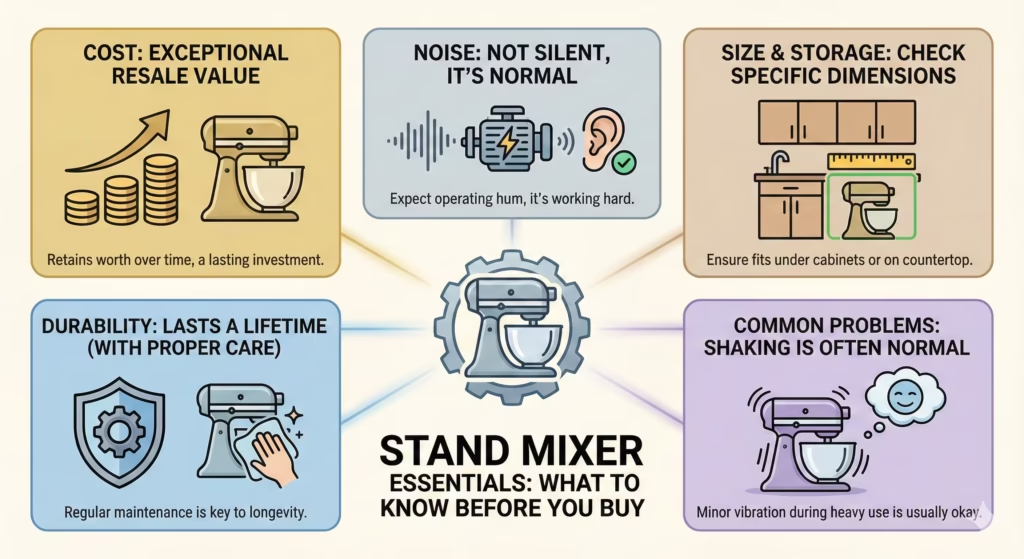
Let’s address common doubts head-on.
- Cost: “Is a KitchenAid mixer worth it?” Yes, for most dedicated bakers. They are built to last for decades, have exceptional resale value, and their attachment system is unrivaled. It’s an investment, but one that pays off over time.
- Noise:Stand mixers are not silent, especially when kneading thick dough. Most new models are intentionally engineered to operate more quietly. Bowl-lift models are often quieter and vibrate less than tilt-head models under heavy loads.
- Size & Storage: “How tall is a KitchenAid stand mixer?” When set up for use, a classic 5-quart Artisan mixer measures around 17 inches from countertop to the highest point. Always check the specific dimensions to ensure it fits under your cabinets.
- Durability: “How long do KitchenAid mixers last?” Thanks to its solid construction, a KitchenAid mixer will last for decades with just a few simple care steps: wiping it down after use and occasionally greasing the gear hub. There are countless stories of models from the 1970s still running strong today. They are built with metal gears and durable motors designed for the long haul.
- Common Problems: Don’t worry if your mixer “walks” or dances a bit on the counter during heavy kneading—this is totally normal, especially with stiff dough. It’s also common for dough to climb the hook. If that happens, just pause the mixer and push the dough back down into the bowl. These aren’t signs of a broken mixer, just a normal part of working with different doughs.
Final Verdict & Conclusion
So, what’s the bottom line?
For the vast majority of home bakers, the KitchenAid Artisan Series is the perfect starting point. It offers the ideal blend of power, convenience, and timeless style that will serve you wonderfully for years.
For the serious baker who regularly makes bread, large batches, or plans to use many attachments, the investment in a KitchenAid Pro 600 is absolutely worth it. Its power and stability are unmatched in the home kitchen.
No matter which path you choose, the most important thing is that you’re making an informed decision based on your own baking habits and needs. Your perfect stand mixer is out there, ready to become your most trusted kitchen companion.
Your ideal stand mixer awaits, ready to be the most reliable partner in your kitchen creations.. Once it arrives, our beginner’s guide will show you how to make everything from bread dough to homemade pasta.
Frequently Asked Questions (FAQ)
What is the best KitchenAid stand mixer for a beginner?
The KitchenAid Artisan 5-Qt Tilt-Head is the best choice for beginners. It’s user-friendly, versatile, and powerful enough for most tasks a new baker will tackle.
Is the KitchenAid 4.5 quart mixer big enough for bread?
Yes, it can handle standard 1-1.5lb bread loaves. However, for frequent bread baking or larger, denser doughs, a more powerful 6-quart model is recommended to prevent motor strain.
Which KitchenAid mixer is the best for family-sized batches?
For a family that bakes a lot, the KitchenAid Pro 600 6-Qt is ideal. The larger capacity allows you to make double batches of cookie dough or large loaves of bread with ease.
What is the difference between KitchenAid Artisan and Professional?
The main differences are the mechanism and power. The Artisan is a tilt-head model with a smaller motor, best for all-purpose baking. The Professional series are bowl-lift models with more powerful motors, designed for heavy-duty tasks like frequent bread making.
Where can I buy a KitchenAid stand mixer on sale?
The best times to find a kitchenaid mixer sale are during major holidays like Black Friday, Cyber Monday, and Amazon Prime Day. Also, check official KitchenAid refurbished outlets for certified refurbished kitchenaid mixer units at a significant discount.