
Latest Posts
- 7 Best Wood Polish for Furniture in 2026 (That Real Users Actually Recommend)
- Best Wood Conditioners: Pre-Stain, Food-Safe and Furniture Picks (2026)
- Wood Conditioner vs Wood Polish: What’s the Difference and Which Do You Actually Need?
- Instant Pot vs Ninja Foodi: Which Multi Cooker Actually Wins in 2026?
- Best Budget Mini Electric Pressure Cookers for Students & Small Families (2026 Edition)
Other Categories
Home & Kitchen Gadget is ad free and support completely to their readers. If you buy any thing through links on our site, we may earn an affiliate commission.
Best Wood Conditioners: Pre-Stain, Food-Safe and Furniture Picks (2026)


Quick Answer: The best wood conditioner depends on the job. For staining pine, birch, maple or alder, use Minwax Pre-Stain Wood Conditioner: the oil-based one under oil-based stain, the water-based one under water-based stain. For cutting boards and utensils, WALRUS Cutting Board and Wood Butcher Oil is our top pick, and Thirteen Chefs Mineral Oil is the budget option. For finished furniture and cabinets, use Caron & Doucet Wood Conditioning Oil, or Beeswax Polish for Wood & Furniture for light scratches. Do not swap them: pre-stain conditioners are not food safe.
| You’re doing this | Best choice | Avoid |
|---|---|---|
|
Staining raw pine, alder, birch or maple |
Minwax Pre-Stain Wood Conditioner: oil-based under oil stain, water-based under water stain |
Skipping the scrap test |
|
Staining oak |
Usually nothing. Test on scrap first |
Conditioner “just in case” (two Minwax oil-based buyers saw oily spots) |
|
Using gel stain |
Nothing. Gel stain sits on top of the wood |
Extra prep you don’t need |
|
Oiling a cutting board, spoons or bowls |
WALRUS Cutting Board and Wood Butcher Oil (top pick), Thirteen Chefs Mineral Oil (budget) |
Pre-stain products, furniture polish |
|
Dull finished furniture or cabinets |
Caron & Doucet Wood Conditioning Oil |
Pre-stain conditioner (bare wood only) |
|
Light scratches on furniture |
Beeswax Polish for Wood & Furniture |
Using it on cutting boards |
Our Top Picks at a Glance
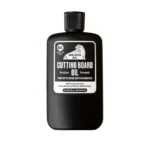
Highly Recommended: WALRUS Cutting Board and Wood Butcher Oil
Best for reviving dry cutting boards and utensils.
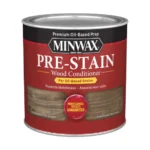
Recommended: Minwax Pre-Stain Wood Conditioner (Oil Based)
Best for pine, birch and maple under oil-based stain.
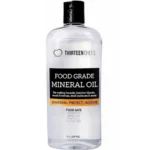
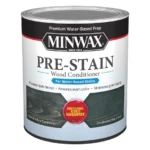
Also Consider: Minwax Pre-Stain Wood Conditioner (Water Based)
Best low-odor prep under water-based stain.
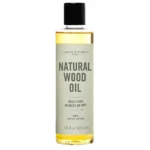
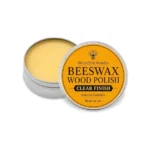
Best Wood Conditioners Quick comparison
| Brand | Product form | Best for | Food safe | Who should buy it |
|---|---|---|---|---|
|
Liquid oil |
Dry boards, utensils |
Yes |
Dry cutting boards |
|
|
Thin liquid |
Pine, birch, maple |
No |
Oil-based stain on softwood |
|
|
Liquid mineral oil |
Everyday board care |
Yes |
A cheap, simple oil |
|
|
Thin liquid |
Low-odor stain prep |
No |
Water-based stain indoors |
|
|
Liquid oil with wax |
Furniture, cabinets |
Listing claims yes |
Finished furniture care |
|
|
Wax polish |
Light scratches |
Listing says yes |
A soft, natural sheen |
WALRUS Cutting Board and Wood Butcher Oil: Highly Recommended
Best for: Reviving dry, faded cutting boards and utensils
| Feature | Detail |
|---|---|
|
Form |
Liquid Oil |
|
Ingredients |
Coconut oil, mineral oil, beeswax, vitamin E (per WALRUS) |
|
Best on |
Cutting boards, utensils, butcher block |
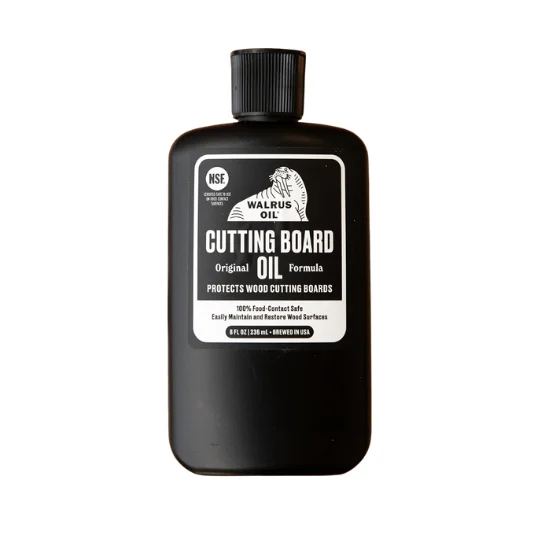
Rating: 4.8 | Reviews: 7,384 | Food safe: Yes
- Product: WALRUS Cutting Board and Wood Butcher Oil
- Problem solved: Dry, faded wood
- Recommendation: Best food safe wood conditioner for dry cutting boards
- Use case: Boards, spoons, butcher block
WALRUS Cutting Board and Wood Butcher Oil. Buyers revived dried boards and utensils, and several noticed deeper color. It had the fewest complaints.
Pros:
- Revived dry boards and utensils
- Deeper color
- No smell
- Fewest complaints
Cons:
- Stays oily if overused
- No applicator, so small jobs waste oil
- Two buyers doubt it beats mineral oil
Who should buy it: Anyone with dry cutting boards or wooden utensils.
Who should skip it: Anyone who wants a hard seal.
Minwax Pre-Stain Wood Conditioner (Oil Based): Recommended
Best for: Blotch-prone pine, birch and maple under oil-based stain
| Feature | Detail |
|---|---|
|
Form |
Thin, clear liquid for oil-based stains only |
|
Ingredients |
Not listed in source (oil-based pre-stain conditioner) |
|
Best on |
Raw pine, maple, birch, alder |
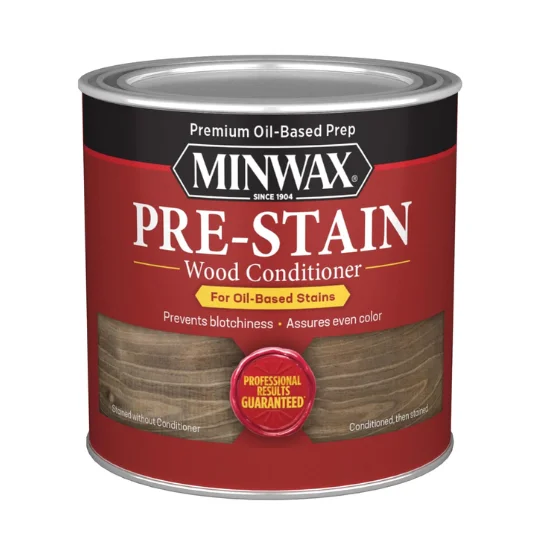
Rating: 4.7 | Reviews: 2,969 | Food safe: No
- Product: Minwax Pre-Stain Wood Conditioner (Oil Based)
- Problem solved: Blotchy stain on soft wood
- Recommendation: Best pre stain wood conditioner for pine under oil-based stain
- Use case: Raw pine, maple, birch
Minwax Pre-Stain Wood Conditioner (Oil Based). It gave even color on raw pine, alder and maple for many buyers, but 4 of 18 reviews saw little or no effect.
Pros:
- Even stain on raw pine, alder, maple
- Dry to the touch in about 15 minutes
- Low cost
- Worked under gel stain for one buyer
Cons:
- 4 of 18 reviews saw little or no effect
- Two buyers saw oily spots bleed back on oak
- Slow to cure (3 days on one floor)
Who should buy it: Anyone staining raw pine, maple or birch with oil-based stain.
Who should skip it: Anyone staining oak or using water-based stain.
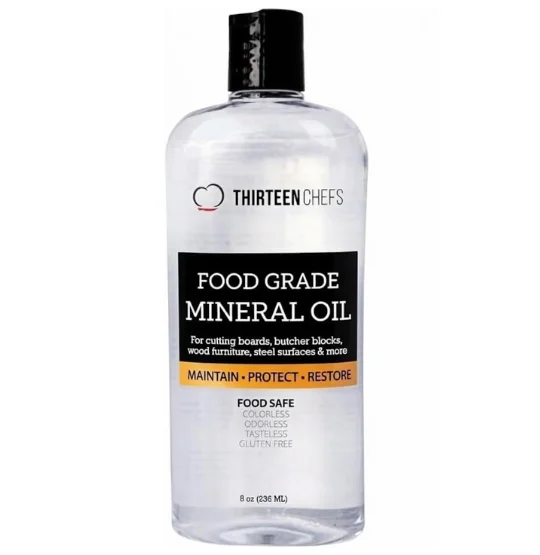
Thirteen Chefs Mineral Oil Conditioner for Wood: Recommended
Best for: Budget everyday care for cutting boards
| Feature | Detail |
|---|---|
|
Form |
Liquid mineral oil, NSF certified (per the listing) |
|
Ingredients |
100% pure food-grade mineral oil |
|
Best on |
Bamboo, butcher block, utensils |
Rating: 4.8 | Reviews: 44,852 | Food safe: Yes
- Product: Thirteen Chefs Mineral Oil Conditioner for Wood
- Problem solved: Dry, thirsty boards
- Recommendation: Best budget food safe wood conditioner
- Use case: Bamboo boards, butcher block, utensils
Thirteen Chefs Mineral Oil Conditioner for Wood, at $6.49 when we checked. It soaks in fast with no greasy film or smell. Check the seal on arrival, because about 10 of 36 reviews mention leaks.
Pros:
- Soaks in fast
- No greasy film or smell
- NSF certified, per the listing
- Lowest price of the six
Cons:
- About 10 of 36 reviews mention leaks or missing caps
- About 6 reviews call it pricey next to pharmacy mineral oil
- Very dry wood needs several coats
Who should buy it: Anyone who wants simple board upkeep on a budget.
Who should skip it: Anyone who wants a seal, because mineral oil never cures.
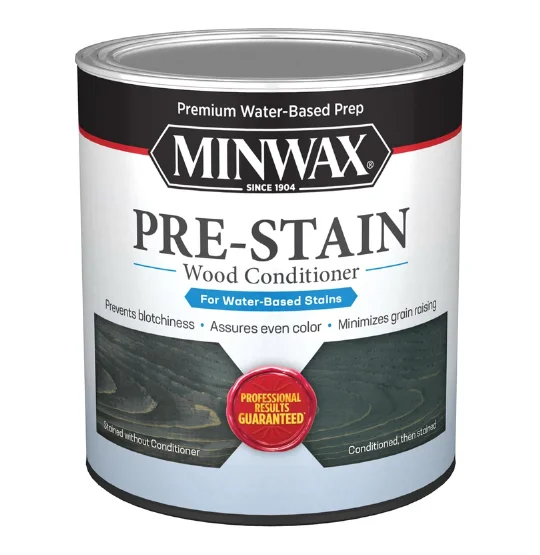
Minwax Pre-Stain Wood Conditioner (Water Based): Also Consider
Best for: Low-odor prep under water-based stain
| Feature | Detail |
|---|---|
|
Form |
Thin, milky liquid for water-based stains only |
|
Ingredients |
Not listed in source (water-based pre-stain conditioner) |
|
Best on |
Indoor furniture, pine, cherry |
Rating: 4.5 | Reviews: 583 | Food safe: No
- Product: Minwax Pre-Stain Wood Conditioner (Water Based)
- Problem solved: Uneven water-based stain
- Recommendation: Best low odor pre stain wood conditioner for water-based stain
- Use case: Indoor furniture, pine, cherry
Minwax Pre-Stain Wood Conditioner (Water Based). Buyers like the low smell and easy spreading. We read only 7 reviews, so test it first.
Pros:
- Low odor
- Easy to spread
- Cleans up with soap and water
- Helps control raised grain, per Minwax
Cons:
- Makes stain lighter (one buyer needed 4 coats)
- Mixed on cherry (2 of 3 panels needed a second coat)
- 3 of 7 reviews mention leaks or dents
Who should buy it: Anyone using water-based stain indoors who wants less smell.
Who should skip it: Anyone using oil-based stain
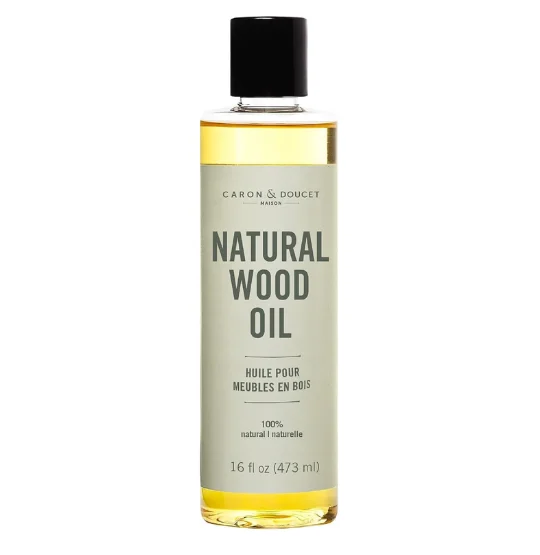
Caron & Doucet Wood Conditioning Oil: Also Consider
Best for: Furniture, cabinets and treated wood
| Feature | Detail |
|---|---|
|
Form |
Liquid oil with wax |
|
Ingredients |
Coconut oil, rice bran wax, orange oil (per the listing) |
|
Best on |
Finished furniture, cabinets, log chairs |
Rating: 4.7 | Reviews: 1,166 | Food safe: The listing claims food-safe ingredients, but it is sold for furniture
- Product: Caron & Doucet Wood Conditioning Oil
- Problem solved: Dry furniture and cabinets
- Recommendation: Best wood conditioner for furniture
- Use case: Cabinets, chairs, treated wood
Caron & Doucet Wood Conditioning Oil. Buyers use it on furniture, cabinets and log chairs. No reviewer used it on a cutting board.
Pros:
- Restores furniture and cabinets
- Plant-based, per the listing
- Light citrus scent
- A little goes far
Cons:
- Slow to absorb
- Highest price of the six
- Turns untreated wood very dark, and some bottles leak
Who should buy it: Anyone caring for finished furniture or cabinets.
Who should skip it: Anyone with cutting boards or raw wood they want to keep light.
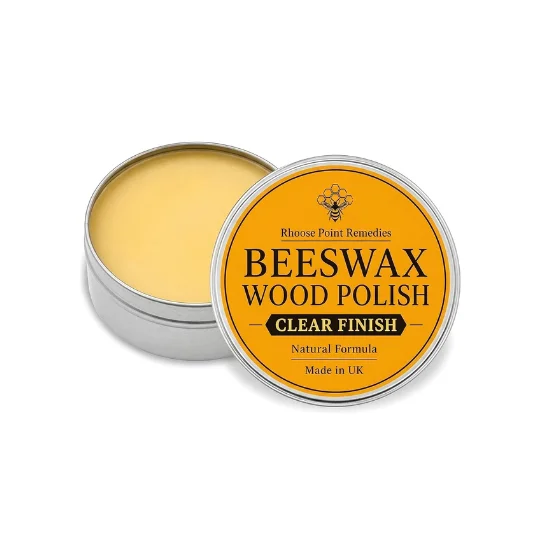
Beeswax Polish for Wood & Furniture: Also Consider
Best for: Hiding light scratches on furniture
| Feature | Detail |
|---|---|
|
Form |
Wax polish in a tin, unscented |
|
Ingredients |
Beeswax and extra virgin olive oil |
|
Best on |
Oak tables, antique cabinets, pine furniture |
Rating: 4.7 | Reviews: 3,158 | Food safe: The listing says yes
- Product: Beeswax Polish for Wood & Furniture
- Problem solved: Dull, lightly scratched furniture
- Recommendation: Best wood polish and conditioner for light scratches
- Use case: Oak tables, antique cabinets, pine furniture
Beeswax Polish for Wood & Furniture. It hid scratches on a hutch and on dog-scratched pine. The finish is a soft sheen, not a gloss.
Pros:
- Easy to rub on
- Hid light scratches
- Lifted a water mark from oak
- Unscented
Cons:
- Flat finish (3 of 6 three-star reviews)
- Small, pricey tin with a stiff lid
- Two buyers say “pure beeswax” misleads (it has olive oil)
Who should buy it: Anyone who wants a natural polish for light scratches.
Who should skip it: Anyone who wants a gloss or plans to use it on cutting boards.
Minwax vs WALRUS vs Thirteen Chefs vs Caron & Doucet vs Beeswax Polish
Minwax (Oil Based):
The only one made for staining prep. More reviews than the water-based Minwax, but a stronger smell.
Minwax (Water Based):
Easier on the nose and cleanup, but stain comes out lighter and the review sample is small.
WALRUS:
Best at reviving dry wood with the fewest complaints. It needs 12 to 24 hours; Thirteen Chefs soaks in faster.
Thirteen Chefs:
Cheaper than WALRUS and quick to absorb, but the bottle leaks more often.
Caron & Doucet:
A furniture oil that feeds the wood. Beeswax Polish only adds a soft sheen.
Beeswax Polish:
Hides light scratches, but the finish is flat. Pick Caron & Doucet to condition instead.
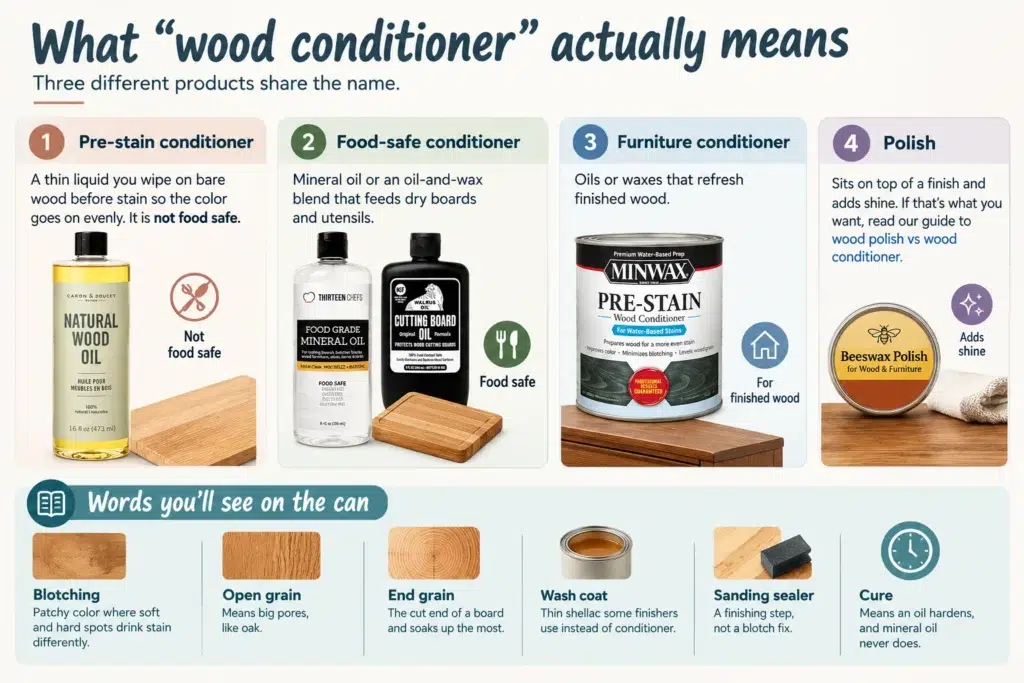
What “wood conditioner” actually means
Three different products share the name.
- Pre-stain conditioner: a thin liquid you wipe on bare wood before stain so the color goes on evenly. It is not food safe.
- Food-safe conditioner: mineral oil or an oil-and-wax blend that feeds dry boards and utensils.
- Furniture conditioner: oils or waxes that refresh finished wood.
Polish is a fourth thing. It sits on top of a finish and adds shine. If that’s what you want, read our guide to wood polish vs wood conditioner.
Words you’ll see on the can: Blotching is patchy color where soft and hard spots drink stain differently. Open grain means big pores, like oak. End grain is the cut end of a board and soaks up the most. Wash coat is thin shellac some finishers use instead of conditioner. Sanding sealer is a finishing step, not a blotch fix. Cure means an oil hardens, and mineral oil never does
Staining? Check your wood first
Softwoods and a few hardwoods soak up stain unevenly. That is what conditioner is for
| Wood | Use conditioner? | Note |
|---|---|---|
|
Pine, spruce, fir |
Yes |
Minwax lists them as the main use |
|
Alder, birch, maple |
Yes |
Also on Minwax’s list |
|
Cherry |
Usually |
Blotch-prone, but one buyer needed a second coat |
|
Poplar |
Test first |
One buyer’s side-by-side showed no difference |
|
Birch plywood |
Test first |
Reports are mixed |
|
Oak |
Usually skip |
Two buyers got oily spots bleeding back |
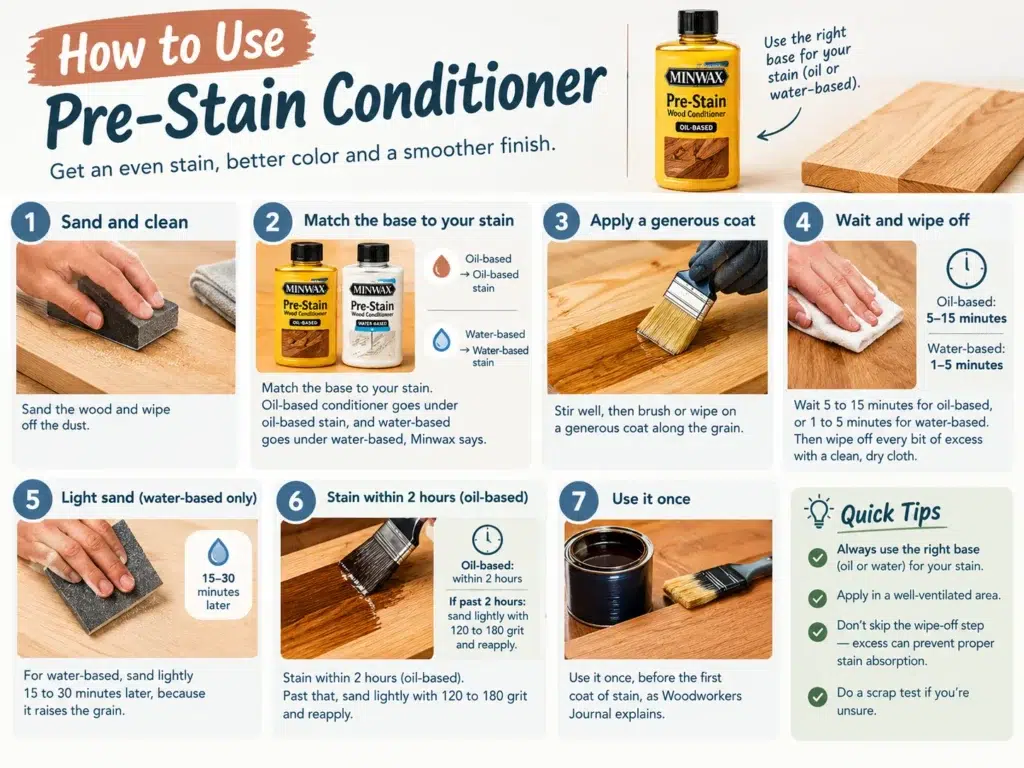
How to use pre-stain conditioner
- Sand the wood and wipe off the dust.
- Match the base to your stain. Oil-based conditioner goes under oil-based stain, and water-based goes under water-based, Minwax says.
- Stir well, then brush or wipe on a generous coat along the grain.
- Wait 5 to 15 minutes for oil-based, or 1 to 5 minutes for water-based. Then wipe off every bit of excess with a clean, dry cloth.
- For water-based, sand lightly 15 to 30 minutes later, because it raises the grain.
- Stain within 2 hours (oil-based). Past that, sand lightly with 120 to 180 grit and reapply.
- Use it once, before the first coat of stain, as Woodworkers Journal explains.
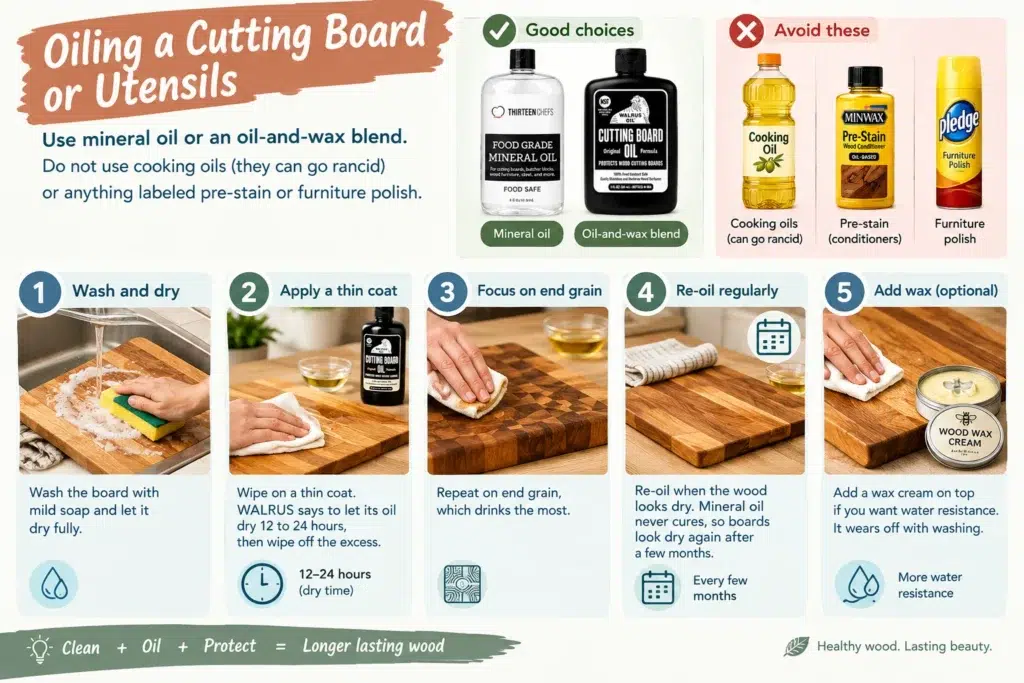
Oiling a cutting board or utensils
Use mineral oil or an oil-and-wax blend. Do not use cooking oils (they can go rancid) or anything labeled pre-stain or furniture polish.
- Wash the board with mild soap and let it dry fully.
- Wipe on a thin coat. WALRUS says to let its oil dry 12 to 24 hours, then wipe off the excess.
- Repeat on end grain, which drinks the most.
- Re-oil when the wood looks dry. Mineral oil never cures, so boards look dry again after a few months.
- Add a wax cream on top if you want water resistance. It wears off with washing.
Refreshing finished furniture and cabinets
Use a conditioning oil or a wax polish, and test on a hidden spot first. Buyers say one plant-based conditioning oil turns untreated wood very dark. A beeswax polish hid light scratches but left a soft sheen, not a gloss. Pre-stain conditioner is for bare wood only. For shine. see our guide to the best wood polish for furniture.
Common problems and quick fixes
| Problem | Likely cause | Fix |
|---|---|---|
|
Still blotchy |
Too little product, or you stained after 2 hours |
Sand lightly and reapply, then test on scrap |
|
Stain too light |
Conditioner partly fills the pores |
Add another stain coat, or dye first on pine |
|
Oily spots on oak |
Open pores bleeding back |
Wipe well, or skip conditioner on oak |
|
Rough surface |
Water-based product raised the grain |
Sand lightly after 15 to 30 minutes |
|
Board feels oily |
Too much oil left on |
Wipe the excess after the soak time |
|
Board looks dry again |
Mineral oil never cures |
Re-oil |
What owners wish they had known
We found very few reports from owners six months or more after use, so this list comes from buyer reviews and woodworking forum threads.
- The stain came out lighter than expected. Conditioner partly fills the pores, so less stain gets in. One reviewer found it hard to reach a dark tint.
- It was still blotchy. In our Minwax oil-based sample, 4 of 18 reviews saw little or no effect.
- It took days to settle. One buyer waited 3 days for a conditioned floor to dry enough.
- Mineral oil needed a routine. It never cures, so boards need re-oiling every few months.
The bottle leaked. About 10 of 36 Thirteen Chefs reviews mention leaks or missing caps, and 3 of 7 water-based Minwax reviews mention leaking or dented cans
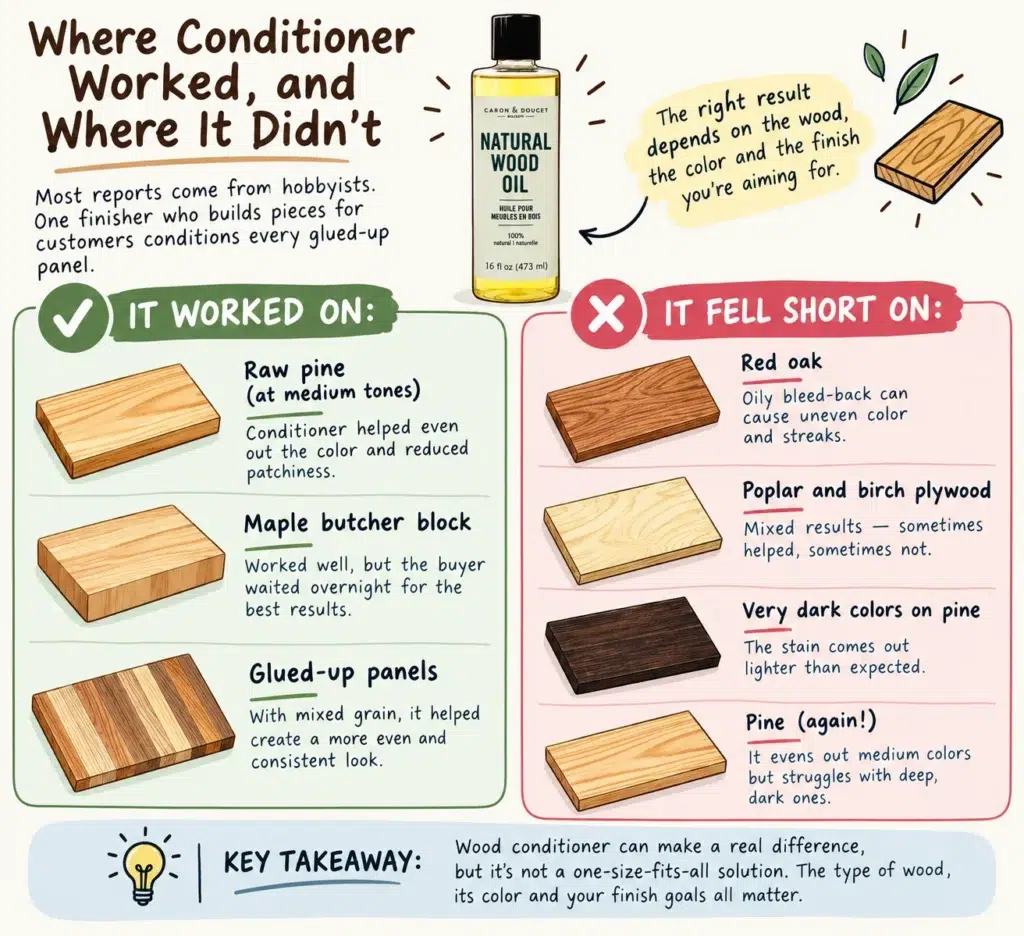
Where conditioner worked, and where it didn’t
Most reports come from hobbyists. One finisher who builds pieces for customers conditions every glued-up panel.
It worked on: raw pine at medium tones, a maple butcher block (the buyer waited overnight), and glued-up panels with mixed grain.
It fell short on: red oak (oily bleed-back), poplar and birch plywood (mixed results), and very dark colors on pine, where the stain comes out lighter. Pine shows up in both lists, because it evens out medium colors but struggles with deep dark ones
HK Gadgets Recommendation: Which Wood Conditioner Should You Buy?
Our top pick for staining is Minwax Pre-Stain Wood Conditioner, and for cutting boards it is WALRUS Cutting Board and Wood Butcher Oil. Here is the full list by job, based on about 120 buyer reviews.
| If you need | Buy this |
|---|---|
|
Even stain on pine, birch or maple with oil-based stain |
Minwax Pre-Stain Wood Conditioner (Oil Based) |
|
Low-odor prep under water-based stain |
Minwax Pre-Stain Wood Conditioner (Water Based) |
|
The best food-safe oil for cutting boards |
WALRUS Cutting Board and Wood Butcher Oil |
|
A budget oil for everyday board care |
Thirteen Chefs Mineral Oil Conditioner for Wood |
|
A conditioner for furniture and cabinets |
Caron & Doucet Wood Conditioning Oil |
|
Hiding light scratches on furniture |
Beeswax Polish for Wood & Furniture |
Not sure which type you need? Read wood polish vs wood conditioner. If you mainly want shine, see the best wood polish for furniture.
Frequently Asked Questions
How long should wood conditioner dry before staining?
For Minwax oil-based, wipe off the excess after 5 to 15 minutes, then stain within 2 hours. For the water-based one, wipe after 1 to 5 minutes and sand lightly after 15 to 30 minutes. If you miss the window, sand lightly and reapply.
Do you need wood conditioner on oak?
Usually not. Oak has open pores, and two Minwax oil-based buyers saw oily spots bleed back. A woodworking forum thread says red oak does this even without conditioner. Test on scrap first.
Should the conditioner match the stain?
Yes. Use oil-based conditioner with oil-based stain, and water-based conditioner with water-based stain. Minwax makes both and warns against mixing them up.
Does wood conditioner make stain lighter?
Often, yes. It partly fills the pores, so less stain soaks in. Test on scrap, add another stain coat, or use dye first on pine.
Do you need conditioner with gel stain?
No. Gel stain sits on top of the wood instead of soaking in, so many finishers skip conditioner with it.
Is pre-stain the same as wood conditioner?
For staining, yes. But “wood conditioner” also covers food-safe oils and furniture conditioners.
What is the best conditioner for softwoods?
Minwax oil-based worked on raw pine, alder and maple for most buyers. Results vary, so test first.
Which conditioner dries quickly or smells least?
Minwax lists the oil-based one as dry to touch in 15 minutes. Water-based buyers call it low odor and fast drying.
Can I use olive oil on a cutting board?
It’s not the usual choice. Forum posters say to avoid vegetable oils, and mineral oil does not go rancid.
Is sanding sealer the same as conditioner?
No. Minwax says its conditioner is not a sanding sealer. A thin shellac wash coat is the closest alternative. See sanding sealer vs wood conditioner for the full comparison.
Is pre-stain conditioner food safe?
No. The oil-based kind contains solvents such as mineral spirits, and neither Minwax conditioner is sold for food contact, so keep them off cutting boards and utensils.
The short version
Match the product to the job. Use pre-stain conditioner only on blotch-prone bare wood, food-safe oil on cutting boards, and a conditioning oil or wax polish on finished furniture. Whatever you buy, match the base to your stain and test on scrap first. For shine, see our guide to the best wood polish for furniture.

Waqas Ramzan
I don't just research products — I buy and use them myself, then cross-reference my experience against thousands of verified customer reviews to find what brands won't tell you upfront. Most review sites test something for a week and move on. My process is different: real purchase, real use, real patterns pulled from hundreds of buyer reviews months after purchase — the complaints, the failures, the surprises that never appear in marketing copy. I'm here because bad purchasing decisions cost real money. My job is to make sure yours doesn't.