Latest Posts
- Smart Coffee Makers Explained Honestly: What Actually Works, What Fails, and When Simple Coffee Machines Win
- Smart vs Manual Blenders Explained: How to Choose the Right Blender for Real Home Use
- Best Smart Air Fryers (2026 Reviews): Take the Guesswork Out of Cooking with Smart Presets
- Stop Wasting Money: “Tilt-Head vs. Bowl-Lift” Data-Driven Guide to Choosing Your Perfect Stand Mixer
- Why Homeowners Are Switching to Smart Plugs Fast (With Tested Picks & Reviews)
Other Categories
Home & Kitchen Gadget is ad free and support completely to their readers. If you buy any thing through links on our site, we may earn an affiliate commission.
Types of Spice Racks Explained: The Complete Kitchen Buying Guide
-
 Waqas Ramzan
- January 10, 2025
- Storage and Organization
This post updated on Oct 09, 2025
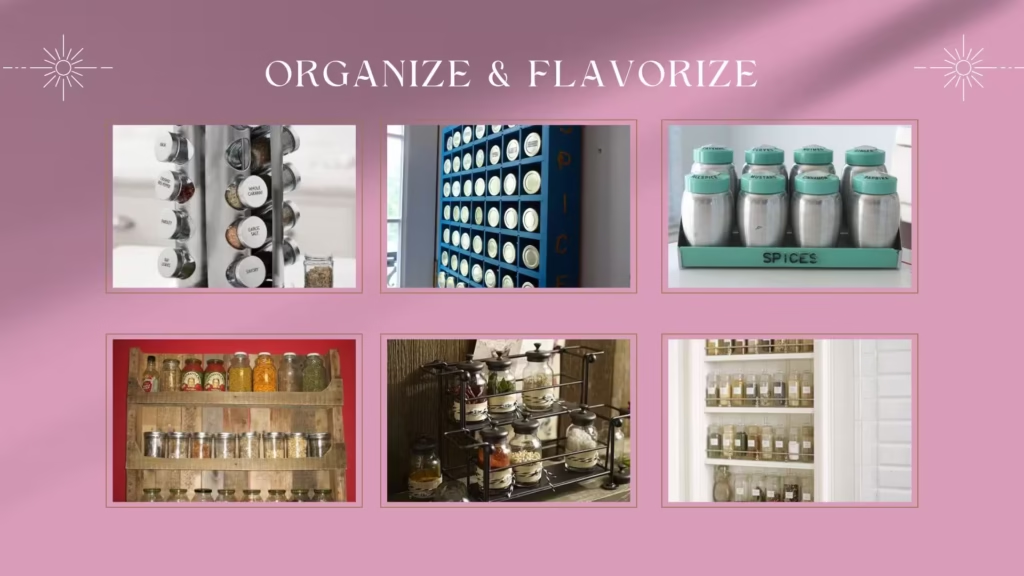
Anyone who cooks regularly has faced the same scenario: reaching for a spice and realizing its hidden behind five others, buying a new jar only to discover two half-used ones at the back of the cabinet, or worse—sprinkling a stale spice that has lost its punch. A well-planned spice rack organizer isn’t just about neatness; it’s about cooking faster, reducing waste, and keeping flavors alive.
If you’re serious about organizing spices or improving overall kitchen organization, understanding different spice container types can completely change the way you cook.
This guide walks through everything you need to know, from evaluating your kitchen layout to understanding which type of rack matches your cooking habits. Along the way, we’ll look at real-world examples to see how different storage systems work in practice.
How to Pick the Right Spice Rack

Know Your Space before Choosing
Avoid the most common mistake: buying a rack before assessing your kitchen. Check where you actually use spices, measure carefully, and consider all potential spots, counters, drawers, walls, or cabinet doors. Knowing your space makes the right choice obvious.
When deciding where to put spice rack in kitchen spaces, always think about airflow, light exposure, and cooking convenience. Proper placement not only improves accessibility but also helps in maintaining spice freshness.
If you’re short on time, here’s a quick rule of thumb:
- Renters (no drilling allowed): Use a magnetic spice rack for refrigerator sides or adhesive wall-mounted spice racks. Check weight limits (most hold around 11 lbs).
- Deep drawer owners: Go for a drawer spice rack insert with lid labels. Measure drawer clearance for taller bottles.
- Big collections: A pull out spice rack or drop-down cabinet organizer maximizes storage while keeping jars visible.
- Fast scanners: Tiered spice racks or a Lazy Susan for spices make it easy to spot what you need quickly.
- Freshness tip: Store spices in airtight spice containers for freshness and keep them away from direct sunlight and stove heat.
For anyone searching for kitchen organization ideas or a detailed spice cabinet organization guide, start by mapping your current layout. This will help identify unused areas for shelves, drawers, or even a compact spice rack mounted near prep zones.
Match the Rack to Your Kitchen and Cooking Habits

Choosing the right spice rack isn’t about finding the one with the best reviews; it’s about finding the one that best fits your kitchen layout and your cooking style. The perfect system balances your need for capacity with your need for accessibility. Follow this three-step diagnostic to identify your needs before you start shopping.
Assess Your Space & Map Potential Zones
before you fall in love with a wall-mounted rack or a drawer insert spice organizer, you need to know where it can actually go. Start by sketching a simple layout of your kitchen, noting cabinets, drawers, wall segments, and the side of your fridge. Record key dimensions: depth, height, width, and clearance.
Then, categorize these areas:
- “The prime cooking zone” (Ideal for your most-reached-for spices)“
- “Inside a drawer”(Good for keeping things dust-free)
- “Pantry wall”(Best for high-capacity storage)
- “Cabinet door interior”(Excellent for utilizing often-wasted space)
For example, one cook named Maria discovered the cabinet above her range was only 10 cm deep—too shallow for standard jars, which immediately ruled out several options.
This assessment also supports better kitchen drawer organization because it ensures each drawer’s height and width align with your chosen spice rack drawer insert solutions.
Audit Your Spice Collection & Usage
Take stock of every spice you own. Some cooks use 30 jars; others have over 100. Now, classify them by frequency of use:
- Daily/Weekly(Your workhorse spices)
- Monthly(For specific recipes)
- Rarely(Special occasion items)
This audit is revealing. Maria found that just 12 jars represented 90% of her usage; the rest were backups or rare finds. This is also the perfect time to discard items past their prime (if they have no aroma, they have no flavor) and merge duplicates.
During this process, labeling spice jars properly helps you scan faster and prevents mixing up similar colors. Use clear, waterproof labels and match the font across jars for a uniform kitchen organization look.
Decide Your Priority: Capacity vs. Usability
Now, combine the insights from Step 1 and Step 2 to define your primary need. Your cooking habits will point you in the right direction:
- If you use the same 10-12 spices daily, quick visibility and access are your top priorities. A drawer spice organizer or a small tiered counter rack will serve you better than a large, out-of-sight cabinet system.
- If you’re an adventurous cook with 40+ spices, you need a solution that balances high storage with good accessibility. A wall-mounted spice rack or a slide-out cabinet system is often the best fit.
- For renters or small kitchens where flexibility is key, a magnetic spice rack for the refrigerator or side of a cabinet offers everything in reach without any tools or permanent drilling.
Those with limited counter space can check our Best Spice Rack for Small Kitchens suggestions, focusing on compact spice rack models and creative spice storage options that still deliver visibility.
Putting It All Together
Think about how these elements interact. A family in a rental apartment used magnetic racks on the fridge for their daily spices like cumin and paprika, while less common items stayed in a box in the pantry. This “split system” worked because it matched their actual cooking frequency and spatial constraints. Similarly, one cook in a midtown apartment abandoned a deep drawer solution because their standard jars were too tall and scraped the drawer lid.
To optimize this type of setup, explore Pantry Storage Ideas or a Drawer Spice Rack for Deep Drawers, especially if you need to maximize cabinet space while keeping spices visible.
Key Buying Decision Factors

| Persona / Constraint | Choose This | Why | Setup Notes |
|---|---|---|---|
|
Renter, zero drilling |
Magnetic shelves/jars |
No tools, relocatable, holds spices + oil |
Check magnetism; add wall plate; avoid heat/light |
|
Deep‑drawer owner |
Inclined drawer insert + lid labels |
Fast scanning; clean counters |
Measure internal height; standardize |
|
Big collection, hates countertop clutter |
Drop‑down cabinet organizer |
High capacity; eye‑level access in cabinet |
Confirm cabinet depth + shelf height; apply labels |
|
Pantry door user |
Door‑mounted wire rack |
Uses vertical space; good visibility |
Verify shelf depth vs. jar diameter; test door close |
|
Gift / ready out‑of‑box |
Pre‑filled carousel |
Aesthetic & complete |
Replace common spices with fresh bulk; refills often 5‑year/S&H |
How do I match my spice rack to my kitchen?
Layout
Choosing the right spice rack begins with understanding how your kitchen is set up. A spice organizer that works beautifully in one home may be completely impractical in another. For example, a renter in a small apartment may prefer a magnetic spice rack for refrigerator placement, while a homeowner with deep cabinets might rely on a pull out spice rack.
Some layout-driven solutions include:
- Drawers: Ideal for a drawer spice rack insert, which keeps counters clear and spices arranged neatly with labels facing upward.
- Pantry doors: Great for a door mount spice rack that makes use of vertical space without crowding shelves.
- Walls: Perfect for a wall mounted spice rack, especially if you like having your spices on display and within quick reach.
- Cabinets: If you have wider base cabinets, slide-out or drop-down racks can maximize hidden storage.
If you’re planning a remodel or looking to refresh your setup, reading a pull out spice rack for cabinet review can help you identify reliable, wobble-free models suited to your cabinet depth and glide system.
Should I pick capacity or a compact footprint?
Capacity vs. footprint
The choice between storage volume and kitchen space efficiency often comes down to cooking habits. Someone who enjoys experimenting with global cuisines will need more room, while a minimalist cook can benefit from a smaller system that keeps essentials tidy.
Consider these comparisons:
- Capacity-first approach: A large pantry organizer or multi-tier cabinet insert can hold 40+ jars, making it the best option for extensive collections.
- Compact-first approach: An expandable spice rack or slim spice rack that fits in a narrow cabinet ensures spices stay organized without overwhelming the kitchen.
- For small apartments: the best spice rack for small spaces is typically a compact spice rack or turntable spice rack that provides easy visibility without cluttering counters.
The balance lies in deciding whether you’d rather see every spice at once or save counter and shelf space.
Which spice racks are easiest to label and scan quickly?
Access speed & labeling
Speed matters in the middle of cooking. The easier it is to scan jars, the less likely you’ll waste time searching or accidentally grab the wrong spice.
Effective options include:
- Spice drawer systems that use lid labeling so names face upward.
- Kits that include pre-printed and blank stickers for a spice rack organizer or spice drawer insert for deep drawers.
- Tiered spice rack solutions that angle jars forward for instant visibility.
When labeling spice jars, maintain consistency in font and placement, it not only enhances organizing spices but also adds a clean aesthetic that aligns with broader kitchen organization ideas.
The golden rule is consistency: matching jars with clear labels not only looks good but also prevents duplicates.
Do glass jars keep spices fresher than plastic?
Freshness & durability
When it comes to herb and spice storage solutions, the material of the container makes a real difference. Glass and metal jars seal more tightly than thin plastic and are less prone to absorbing odors or staining.
Real-world cooking shows this difference clearly: a home baker found that cinnamon in airtight glass jars stayed aromatic twice as long as the same spice stored in plastic. Glass also allows for easy cleaning and long-term reuse.
Key takeaways:
- Glass jars: Best for maintaining freshness and resisting stains.
- Plastic jars: Lightweight and cheap but less airtight over time.
- Metal tins or magnetic spice tins for refrigerator: Provide strong seals but may block visibility if not labeled clearly.
Properly maintaining spice freshness also depends on placement. Avoid direct heat zones and pair airtight containers with racks that limit sunlight exposure.
What makes a spice rack sturdy and wobble-free?
Base & durability
One of the most overlooked buying factors is stability. A flimsy rack that wobbles every time you reach for a jar quickly becomes a daily frustration. A stable base is especially important in a kitchen rack that sits on countertops or slides out from cabinets.
Ways to ensure sturdiness include:
- Choosing racks with non-slip bases or rubber feet for countertops.
- Selecting a spice shelf with solid glides if it’s a pull-out design.
- Avoiding lightweight, thin wire racks if you plan to store heavy spice jars or oils.
For long-term reliability, review models highlighted in best spice storage lists or product roundups before purchasing. These often compare construction quality, material, and space optimization in detail.
A sturdy cabinet organizer ensures jars stay in place, prevents “spice avalanches,” and gives you confidence that your investment will last.
Spice Rack Categories (Types & Who They’re Best For)
This section examines each category, with commentary on when and why each excels or falters, illustrated by examples. Exploring these spice container types helps you choose racks that fit your cooking workflow and kitchen organization goals.
| Spice Rack Type | Best For | Biggest Win | Watch-Out |
|---|---|---|---|
|
Minimalist counters |
Fast top-view labels |
Tall bottle clearance issues |
|
|
Renters, tiny kitchens |
No-drill, relocatable |
Weak fridge magnetism |
|
|
Visual cooks |
Zero counter use |
Door clearance & adhesives |
|
|
Hidden storage |
Smooth glides |
Cheap slides may wobble |
|
|
Large collections |
Instant visibility |
Uses counter/shelf space |
|
|
Gifts & starters |
Plug-and-play setup |
Spices lose freshness quickly |
Drawer Spice Rack Inserts (Inclined or flat)
A drawer spice rack insert makes use of otherwise wasted drawer space. The best part is how easily you can scan labels when jars are tilted upward. One family who switched to this system said they cut cooking time because they no longer rummaged for basics like oregano or garlic powder, modern spice rack drawer insert solutions also pair well with kitchen drawer organization accessories, keeping jars upright and lids visible.
The challenge? Deep drawers with tall bottles. If the insert sits too high, the drawer may not close. Measuring carefully and standardizing jar sizes solves this problem.
To adopt this route:
- Measure drawer internal height.
- Choose inserts rated for that height (some are shallow-angle so low-profile jars work).
- Use uniformly shaped jars (so they don’t roll or block each other).
- Label lids, so even when lying flat, the name is visible.
When done carefully, the drawer system can deliver speed and concealed organization.
Best for: Minimalist kitchens that prefer clutter-free counters.
Magnetic Spice Racks and Tins
Magnetic racks are lifesavers for renters. They stick to the side of the fridge or a steel plate and can be moved around easily. A college student living in a studio apartment kept all her spices in magnetic jars on the fridge—no drilling, no clutter, and everything stayed within reach of the stove. They are also a top pick in Best Spice Rack for Small Kitchens lists because of their adaptability and ability to maximize cabinet space without permanent installation.
The risk is slipping if the fridge isn’t strongly magnetic. Heavier jars may slowly slide, which is why it helps to load the smallest, lightest jars at the top and keep oils or bigger jars on lower shelves.
But these systems depend on magnetic strength and stability. A magnetic rack that works with steel refrigerator surfaces may slide on aluminum or weaker metal doors. To employ this solution:
- Confirm the magnetic pull strength is sufficient for full jars (especially heavy ones).
- Use a steel backing plate if the surface isn’t magnetic.
- Place heavier jars lower to reduce shear force.
- Choose opaque or lightly tinted magnetic jars to protect against light damage.
Best for: Renters and small spaces.
Wall and Door-Mounted Racks
Wall-mounted racks or racks attached to pantry doors are popular with cooks who like everything on display. They free up counter space and make it easy to see your collection at a glance. DIY spice rack ideas often include compact wall mounts built from reclaimed wood or small shelves to enhance creative spice storage without spending much.
But not every door closes smoothly once jars are mounted. One homeowner realized her pantry door wouldn’t shut because her spice rack extended too far out. The solution was to test with one row of jars first before committing to filling the whole rack.
Success with this type depends on:
- Proper anchoring (studs, drywall anchors)
- Jar height vs. door swing clearance (so lids don’t hit adjacent walls)
- Weight limits—some racks overfilled warp over time
- Easy removal for cleaning and dusting
When correctly installed, a wall mounted spice rack can become a central “spice station” you naturally reach toward as you cook.
Best for: Visual cooks who love vertical storage.
Pull-Out Cabinet Racks
Pull-out racks are built into cabinets and slide out like drawers. They’re ideal for people who dislike clutter and want dust-free storage. In one remodeled kitchen, a pull-out rack next to the stove held more than 30 jars, all hidden until needed.
However, cheap versions can wobble or fail to stay closed. The fix is choosing models with sturdy glides or adding a magnetic catch to keep them in place.
If you want to maximize cabinet space effectively, look for pull out spice rack for cabinet review comparisons that highlight glide stability and jar visibility.
When selecting:
- Ensure drawer slides are rated for full-weight loads with jars.
- Check for full extension (so you see jars at the back).
- Test durability—metal slides last longer than plastic rails.
- Consider adding magnetic catches so doors stay closed.
Best for: Hidden storage with dust protection.
Tiered Shelves and Turntables
For those with big collections but limited patience, tiered shelves and turntables (Lazy Susans) make every jar visible in one glance. They work especially well in deep or corner cabinets where jars would otherwise get lost. Turntable spice rack options are especially popular in small kitchens because they merge accessibility with compact design.
The trade-off is space—they occupy more counter or shelf area than inserts or wall racks. A home cook with a corner pantry solved this by combining two-tier Lazy Susans for bulk spices and a small drawer insert for everyday essentials.
When using this style:
- Choose non-slip surfaces so jars don’t slide while rotating.
- Use a diameter that fits cabinet footprint comfortably.
- Label the top and side of jars for readability.
- For extra volume, use double-tiered lazy susans, but test clearance.
Many kitchens combine a turntable with a wall rack for overflow.
Best for: Big collections and quick scanning.
Pre-Filled Carousels
Pre-filled spice carousels are often marketed as elegant, ready-to-use kitchen organizers. They arrive stocked with a selection of common spices and sit neatly on the counter, usually rotating for easy access. This makes them an appealing gift or a convenient starting point for someone setting up their first kitchen.
Best for:
- Beginners who want an all-in-one spice rack organizer without buying jars separately
- Gift-giving occasions where presentation matters as much as practicality
- Home cooks who prefer a compact, stylish option on the counter
Why they work:
- Come complete with jars and spices, so there’s no setup hassle
- Compact design fits well in small kitchens or apartments
- Rotating carousel provides quick visibility and access
Watch-outs:
- Pre-filled spices may not be as fresh or pungent as bulk-purchased options
- “Free refill” programs often involve shipping fees and limited selections
- Some carousels have fixed jar sizes, which can be restrictive if you want to customize
Spice Freshness, Safety & Long-Term Strategy

No matter which rack you choose, freshness is key. Spices lose their strength when exposed to light, heat, or moisture. That’s why placing a spice rack above the stove is a common but costly mistake.
Glass or metal airtight spice containers work best. Plastic can allow air inside over time. A home baker found her cinnamon stayed aromatic for over a year in airtight glass jars, while an identical batch stored in thin plastic dulled after just six months.
To keep track, label jars with both the name and the date opened. Rotate older jars forward and newer ones to the back. Whole spices like cinnamon sticks or peppercorns last longer than ground spices, sometimes up to two years if stored properly.
Regularly maintaining spice freshness also involves replacing outdated blends and cleaning jar lids to avoid humidity build-up. Keeping jars properly labeled and using uniform spice container types simplifies maintenance and prolongs flavor.
A well-built system only remains useful if maintained. Here’s how to make it durable.
Prevent flavor loss
Spices degrade with exposure to light, heat, and moisture. Good Housekeeping emphasizes keeping them in cool, dark zones not atop stoves or in sunny windows. Opaque jars or placing them inside cabinets helps. Rotate stock: move older jars forward, new ones backward.
Monthly review
Once a month, scan your rack. Discard items that smell weak. Refill jars from bulk reserves. In one café kitchen, the chef instituted Monday-morning “spice check” to prevent stale inventory a tiny habit with outsized payoff.
Reassess capacity annually
As cooking styles evolve, spice collections grow or shrink. If your rack is regularly full, upgrade it or move rare spices to secondary storage. One home cook upgraded her drawer insert to a slide-out cabinet system after two years.
Maintain system integrity
Sliders may loosen, magnets weaken and screws may loosen. Check rack mounts periodically. A user’s magnetic rack lost strength after repainting the fridge, he re-secured it using adhesive steel strip.
For long-term storage enthusiasts, following pantry storage ideas like grouping jars by cuisine or region prevents duplicates and keeps seasonal blends fresh. A good spice cabinet organization guide will also suggest how to store bulk spices in airtight tins for later refills.
Build an Organizing System That Fits You
Once your rack is set, create a system that makes sense for your style of cooking. Some cooks alphabetize everything for quick reference. Others group by cuisine—Italian spices together, Indian spices in another section.
One practical method is the “most valuable players” system. A busy family of five kept salt, pepper, garlic powder, and paprika in a drawer insert near the stove, while everything else lived in a pantry rack. That way, the spices they used daily were always within a hand’s reach.
Consistency also matters. Using jars of the same size makes any spice shelf look cleaner and prevents wasted space. Labels complete the look and keep duplicates from sneaking in.
If you’re struggling with how to organize a spice rack efficiently, consider starting with your cooking zones and labeling spice jars accordingly. This keeps everything accessible during meal prep.
Kitchen organization doesn’t stop with spices. Integrate your spice rack setup with kitchen drawer organization plans and creative spice storage ideas to unify your entire cooking area. Grouping utensils, oils, and condiments near the same zone enhances workflow and aesthetics.
Common Problems and Fixes

Even with the right spice rack, problems often arise due to design flaws, poor placement, or long-term storage issues. The following are the most common spice rack challenges, their causes, and practical fixes.
Spices Falling Out
One of the most frustrating issues is when spice jars topple over or slide out of the rack. This usually happens with racks that have low front rails, tall or lightweight bottles, or racks mounted on pantry or cabinet doors that swing open and closed. Beyond being messy, falling jars can chip, spill, or even break.
Solutions:
- Use shorter, wider, or heavier jars that stay balanced in open racks.
- Add a solid shelf insert, such as a piece of foam board or thin wood, inside wire racks to create a stable surface.
- If jars keep falling on a door-mounted rack, relocate it to a stable wall or upgrade to a rack with deeper rails.
Creative spice storage fixes include using tension rods or small silicone mats on shelves to stop jars from sliding while maintaining easy visibility.
Difficulty Finding Spices
Many people end up wasting time during cooking because their spices are hidden in deep cabinets or stored without a clear organizational system. This often leads to duplicate purchases or grabbing the wrong jar in a hurry.
Solutions:
- Adopt an alphabetical system for straightforward searching.
- Group spices by type or cuisine, such as baking, herbs, or everyday cooking blends.
- Keep the most frequently used spices like salt, pepper, or chili powder at the front of your rack or drawer for quick access.
This approach directly supports better kitchen organization and helps you maintain consistent labeling spice jars strategies for quick scanning.
Poor Space Usage
A common problem in small kitchens is underutilized or inefficient storage space. Racks that don’t fit well, bottles stacked poorly, or vertical space left unused can all lead to cluttered counters and crowded cabinets.
Solutions:
- Use tiered or stair-step spice racks that display jars in rows, making everything visible at once.
- Mount racks on walls or inside cabinet doors to take advantage of unused vertical surfaces.
- Store bottles on their sides in specially designed racks if height clearance is limited.
Combining a compact spice rack with turntable spice rack systems is a proven way to maximize cabinet space and create functional flow in a small kitchen.
Spices Losing Freshness
Flavor loss is another common issue, usually caused by exposure to light, heat, and humidity. Spices stored in thin plastic or left in their original packaging tend to lose aroma faster, making them less effective in cooking.
Solutions:
- Keep spices in a cool, dark, and dry place, away from stoves, ovens, or direct sunlight.
- Transfer spices to airtight containers, preferably glass, which seals better and resists staining.
- Regularly check jars for fading color or weak aroma, and discard expired spices during routine kitchen audits.
For best results, follow maintaining spice freshness tips like labeling opened dates and storing rarely used blends in airtight backup jars.
Bug Infestation
Nothing is more unpleasant than discovering pantry moths, weevils, or other pests in spice jars. Bugs usually enter through store-bought packaging or are attracted to spilled food particles on shelves.
Solutions:
- Inspect new spice purchases carefully before storing them in your rack.
- Transfer spices immediately into airtight glass jars or heavy-duty plastic containers to block pests.
- Keep spice shelves and racks clean, wiping them down regularly to remove spills and crumbs.
Frequently Asked Questions (FAQs)
Which type of spice rack is best for a small kitchen?
If your kitchen is short on space, magnetic spice racks for the fridge or adhesive wall-mounted racks are ideal because they don’t take up counters or drawers. A compact tiered rack can also work for small cabinets.
Do drawer spice racks really save space?
Yes. Drawer spice racks use otherwise wasted drawer space, keeping counters clutter-free. The key is measuring your drawer height—tall jars may not fit.
Are magnetic spice racks safe to use on my fridge?
They’re safe if your fridge is made of steel and the magnets are strong enough. For heavier jars, use a steel backing plate for extra grip. Lighter jars should go at the top, heavier ones near the bottom.
What’s the most durable spice rack material?
Metal and solid wood racks tend to last longest. For jars, glass is best for freshness, while plastic is cheaper but may stain or weaken over time.
Do glass spice jars keep herbs fresher than plastic ones?
Yes. Glass jars seal tighter, resist odors, and don’t stain. Spices like cinnamon or paprika keep their aroma much longer in glass compared to thin plastic.
How long do spices last in a spice rack?
Whole spices like peppercorns or cinnamon sticks can last up to two years. Ground spices usually keep their flavor for 6–12 months if stored in airtight jars, away from heat and sunlight.
Is it okay to keep my spice rack above the stove?
It’s not recommended. Heat and steam from cooking make spices lose flavor faster. A cool, dry cabinet or wall rack away from the stove is better.
What type of spice rack is best for renters?
Renters should choose no-drill options like magnetic spice jars for refrigerators, adhesive wall racks, or freestanding countertop spice carousels. These can be moved without damage.
Are pre-filled spice carousels worth buying?
They’re great as gifts or starter sets, but pre-filled spices often lose freshness quickly. Most people keep the carousel and refill jars with fresher spices.
Which spice rack works best for a big collection?
Pull-out cabinet organizers, drop-down cabinet racks, or large tiered shelves are best if you have 30+ spices. They balance high storage with easy visibility.
How should I organize spices in my rack?
The easiest methods are:
- Alphabetical order for large collections.
- Grouping by cuisine (Italian, Indian, baking).
- Keeping your top 10 “everyday spices” in a quick-access rack near the stove.
How do I stop spices from going stale?
Store them in airtight containers (preferably glass), keep them away from heat and sunlight, and rotate older jars to the front. Label jars with the date you opened them to track freshness.
Can pests get into spice racks?
Yes, pantry moths or weevils can infest spices stored in thin packaging. Always transfer new spices into airtight jars and wipe down racks regularly to keep pests away.

Waqas Ramzan
Waqas Ramzan is product reviewer and content creator at Home & Kitchen Gadgets. Waqas specializes in testing kitchen gadgets, countertop organizers, and smart home tools. His reviews focus on practicality, design, and long-term usability — helping home cooks and apartment dwellers choose what actually fits their space.